TL;DR — Key Takeaways
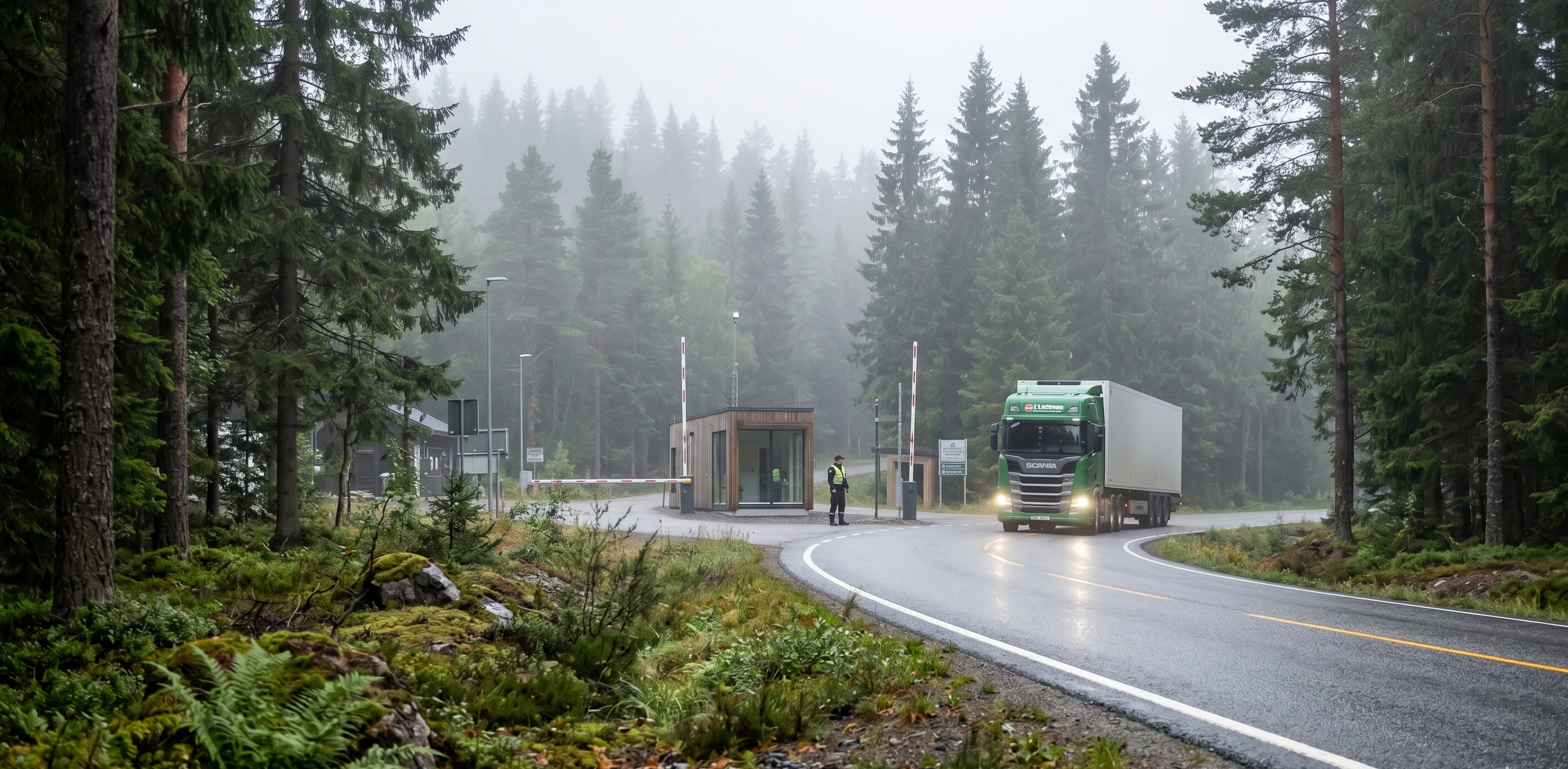
After September 15, 2026, carriers without valid Digitoll pre-filings will be directed to manual processing lanes at border crossings like Svinesund. These manual lanes will have limited capacity, long wait times, and potential fines. Digital pre-clearance is the only scalable option for commercial transport.
How the Border Works Today
Today, the Norwegian border operates with a mix of manual and semi-digital processes. Trucks arriving at Svinesund, Ørje, or other crossings present documentation — often printed paper, PDFs, or email attachments — to customs officers.
This process is slow, inconsistent, and depends heavily on the individual officer and the completeness of the carrier's paperwork. There is no standardised digital handshake between the carrier's systems and Tolletaten.
What Changes After September 2026
After the Digitoll enforcement date, the border will effectively split into two lanes:
• Digital lane: Carriers with valid pre-arrival filings pass through automated camera gates with minimal or no stopping. The system validates the filing against the vehicle registration in real-time.
• Manual lane: Carriers without valid filings are directed to a physical inspection area for manual processing. This is slower, resource-constrained, and carries the risk of fines and cargo delays.
The bottleneck at the manual lane will grow as more carriers adopt digital filing, leaving fewer resources dedicated to manual processing.
Tolletaten has signalled that manual processing capacity will be deliberately limited after enforcement begins. Being in the manual lane is not just slow — it may not be available at peak times.
The Real Cost of Staying Manual
A truck sitting idle at the border for 2–4 hours costs money: driver wages, scheduling disruptions, missed delivery windows, and unhappy customers. Multiply that by several crossings per week, and the cost of not going digital becomes enormous.
Beyond direct costs, carriers with repeated manual processing may face increased scrutiny from customs authorities, leading to more frequent inspections and further delays.
How to Go Digital Now
The transition to digital border crossings requires three things:
1. A compliant platform that connects to Tolletaten's Digitoll API and handles the data submission workflow.
2. Accurate, structured data — consignment details, transport references, and partner information — ready before the truck departs.
3. A trained team that understands the digital checklist and can troubleshoot issues before the vehicle reaches the border.
Odin Customs provides all three: the platform, the data validation, and the compliance support to make your border crossings seamless.
Skip the Manual Lane
Get set up with Odin Customs and file digitally before your trucks reach the border.
Get Started